


Video section: 05:08 - CHAPTER 5: Markeš House
The house stands out from the mainly vernacular architecture in Murova, and shows signs of high architecture. Preserved are Late Baroque portal made of green tuff and Late Gothic stone basement portal. In different periods the house was variously an inn, a tannery and also a shoemaker’s workshop. It was bought by Jožef Markeš in the second half of the 19th century, and his family still occupies it today.

Around 1950 (source: photographic library of the Upper Sava Valley Museum)
Jožef’s son Jože was born here in 1897. When he was young, he trained as an electrician in the ironworks, and later he became a master of his profession. He set up a workshop on the ground floor of the house, and then another one across the street. As a pioneer of electricity, he brought light bulbs to people’s homes, and the advanced innovator in him encouraged him to construct a solar collector. Before 1941, he had connected a phone in his home, which was also used by other Murova residents. They also had a radio at home and the neighbours often came over to listen to it. He was a respected member of the professional cooperative of concessioner electrical technicians, and the founder of the Journal of Electrical Engineering.

Jože Markeš with his family (source: photographic library of the Upper Sava Valley Museum)
Jože really enjoyed his work, which is probably the reason why he managed to involve all five of his sons, as well as his nephews and even grandsons in it throughout his five-decade-long career.
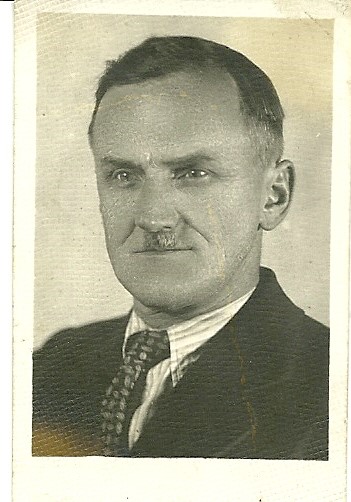
Valentin Markež, mayor of Jesenice from 1935 to 1941 (source: personal archives of Francisco Markez)
Like all of Jože’s siblings, his brother Valentin was also born in this house in 1894. His surname was written with a “ž” due to a bureaucratic mistake, and both versions remain today in otherwise the same bloodline.

Valentin and his family (source: personal archives of Francisco Markez)
Valentin completed the school for commerce in Ljubljana, and after a few years as a railroader, he took a job at Kranjska industrijska družba (KID) in Jesenice. He was in charge of managing the companies’ properties and then became the head accountant in the biggest ironworks company in Slovenia at the time.
He was known for his work in public life: as a young man, he was a member of many educational and professional organisations, and he later became involved in politics. In the difficult period before the Second World War, he was elected mayor of Jesenice, a town with about 9,000 residents at the time.


Tone Čufar in his younger and older years (source: photographic library of the Upper Sava Valley Museum)
The basement of the Markeš house was also the home of a well-known Jesenice writer, Tone Čufar, who was born here in 1905.
Sources:
- »Kako so na Murovi včasih živeli?« (Jesenice Adult Education Centre, 2010),
- »Ta stare Jesenice ali Murova in Plavž« (Zdenka Torkar Tahir, Upper Sava Valley Museum Jesenice, 2010),
- Jesenice Municipal Library – estate of Ciril Praček
- Oral testimonies by locals: family Čufer., Janez Pšenica, Avgust Mencinger, Jože Mencinger, Janez Višnar Jr., Anton Ravnikar, Dušan Hafner, Marija Markeš, Zvonka Petrovič


Imprint:
Project: The Memories of Old Jesenice Settlement
Financed by: Municipality of Jesenice
Realisation: Upper Gorenjska Development Agency, Gornjesavski muzej Jesenice
Proofreading and translation: TellUs, Maja Davis s.p.
Photo editing: Jamaja, Maja Rostohar s.p.
Jesenice, 2020


