[SLO] 5. Poglavje: Nekoč ljudska šola, danes gimnazija
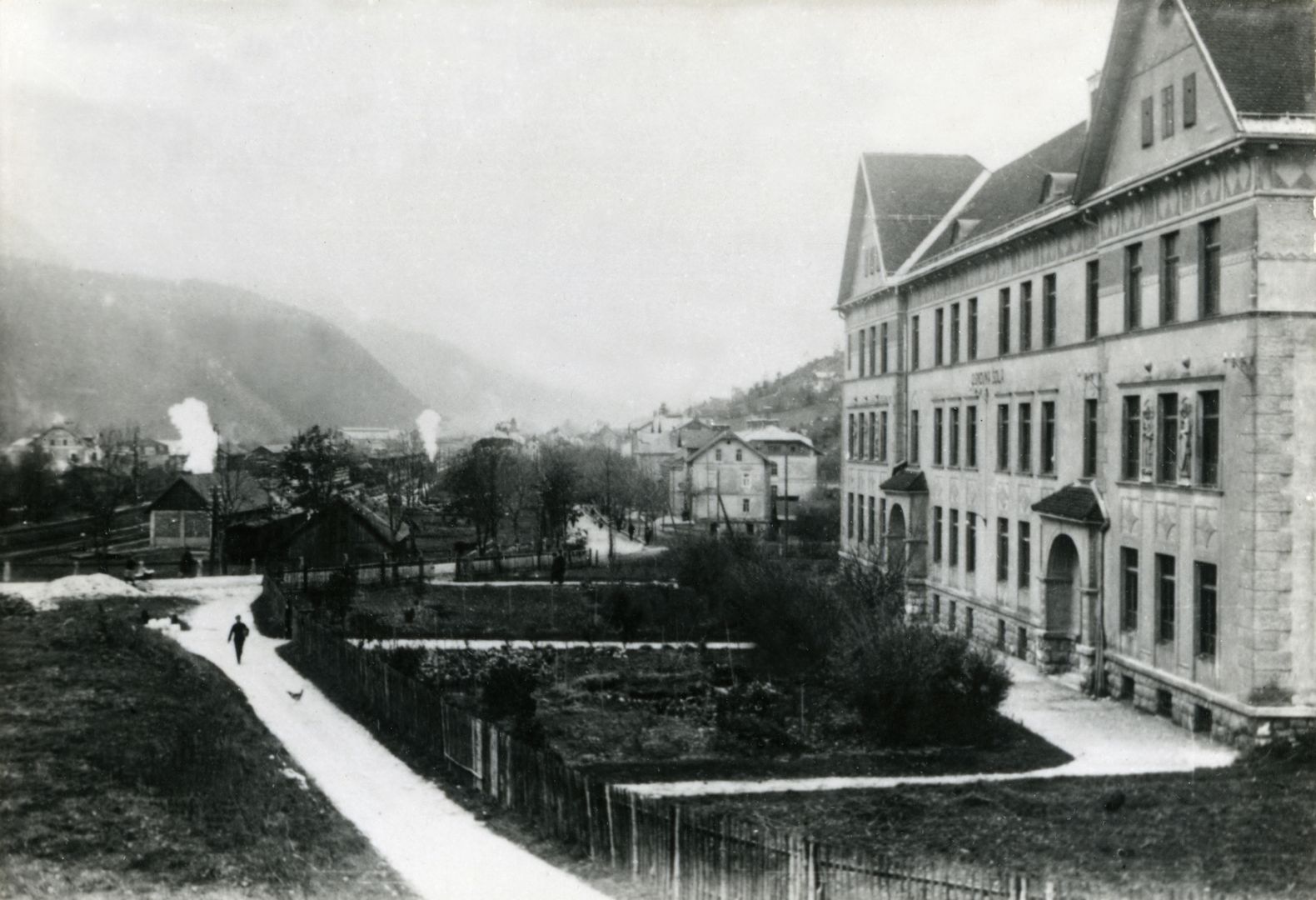
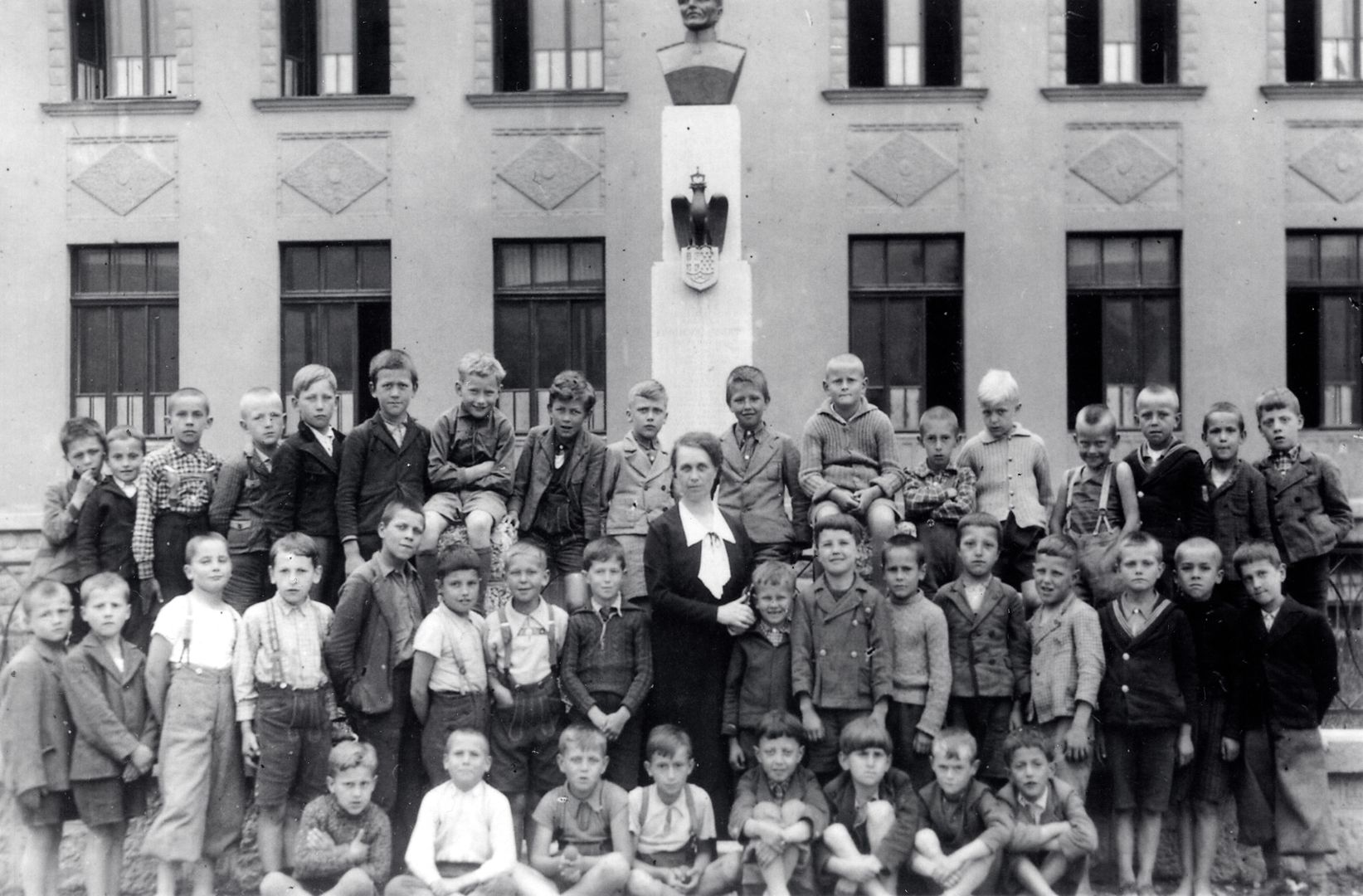
At the turn of the 20th century, the new ironworks plants and the transport connection to Jesenice attracted many immigrants. With them, the number of school-age children increased. Kos Manor House, once the only four-grade school, became too small and the need arose for a new, larger school. Thus in 1914, a primary school (today's secondary school) was built. At the time, 694 schoolchildren attended it. The grand opening of the new school took place on 5 April 1915. During the First World War, classes were interrupted several times, and a military hospital was temporarily set up on the school premises. In the period between the wars, this was a compulsory six-grade primary school for the entire urban area. During World War II and the German occupation, classes were held in German and were taught by German teachers. During the Allied bombing on 1 March 1945, the building remained undamaged.
This is how a local resident, Ivanka Knafelj Štrukelj, remembers the germanisation in schools during the German occupation:
“The Germans immediately closed all Slovenian schools, and soon expelled the nationally conscious teachers to Serbia. The national school’s building was occupied by the army, which destroyed school property and also burned the school's documents.”
This is how Albina Sršen remembers her secondary school education:
“I progressed from primary school with a very difficult school-leaving examination. For the next four years, I attended the lower secondary school in the premises of today’s secondary school. I had a wonderful class teacher, Branko Torkar. He dared to take us on an end of year trip to Blegoš. On the train to Škofja Loka he taught us a gypsy song: “Svi cigani svetca slav, čavrole …” I still know the words today. My older brother and I both went to secondary school. I went in the morning, and he went in the afternoon. But we only had one set of geometry tools. Of course, I was mostly without it, so I got a reminder in Maths in the first quarter.”
Bratko Škrlj, a renowned professor, the principal of the Gimnazija Jesenice secondary school, and an honorary citizen of the Municipality of Jesenice, described what led to the establishment of the Gimnazija Jesenice secondary school:
“The life of the people of Jesenice was subordinated to the demands of the ironworks, and so were the schools. Primary school education was sufficient to work in the ironworks. There was no secondary school or any other high school. Thus, the people of Jesenice were pre-determined to work as locksmiths, electricians, Siemens-Martin furnace or blast furnace operators, and similar professions. Until World War II, there were no university-educated locals, so we had to “import” all intellectuals from Ljubljana, Škofja Loka, Styria… The factory needed engineers, and the town needed lawyers and economists. Considering all this, one inadvertently wondered: are we, here at the source of the River Sava, really so stubborn and inept at academic professions? The answer to these doubts came soon after World War II.”
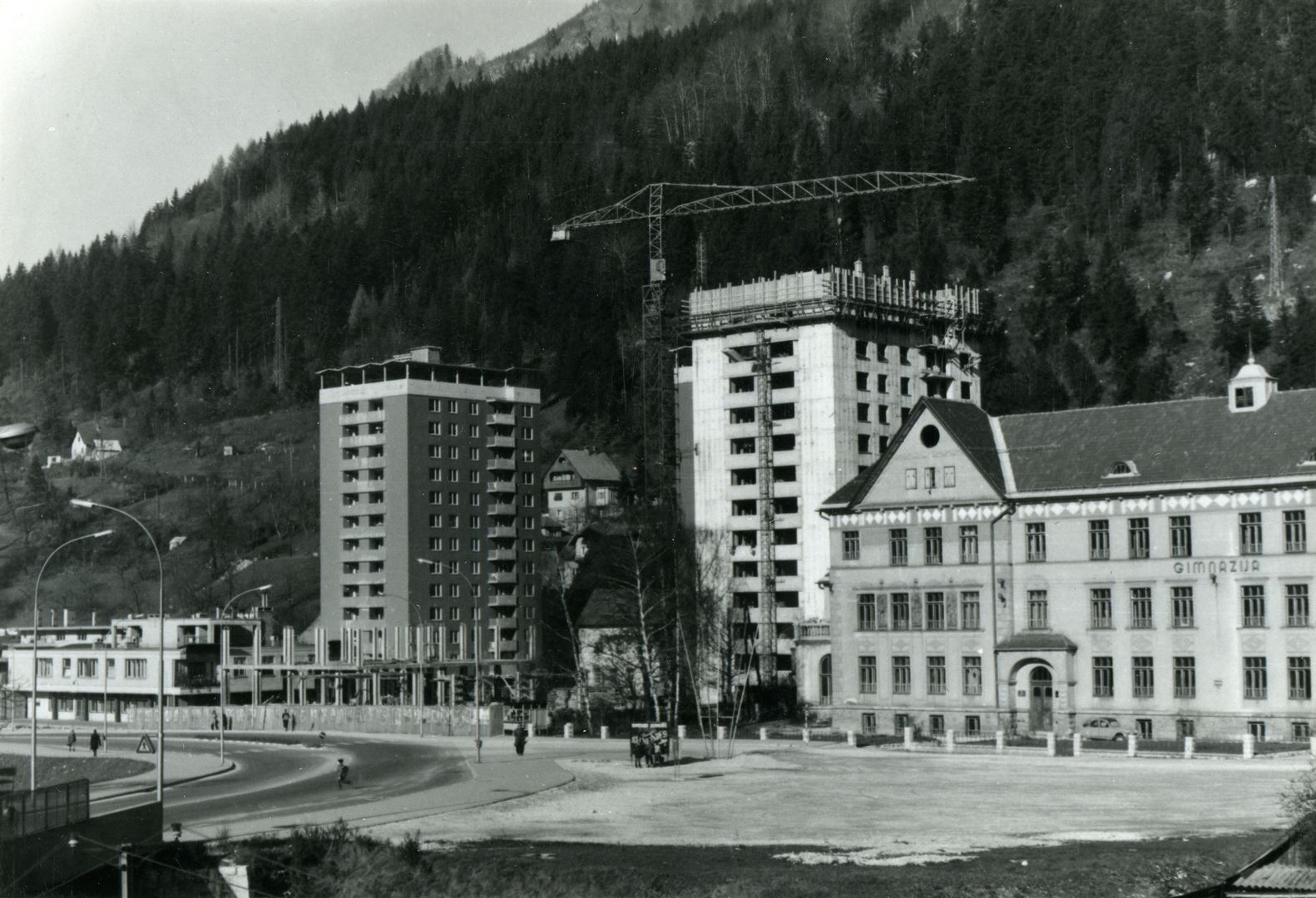
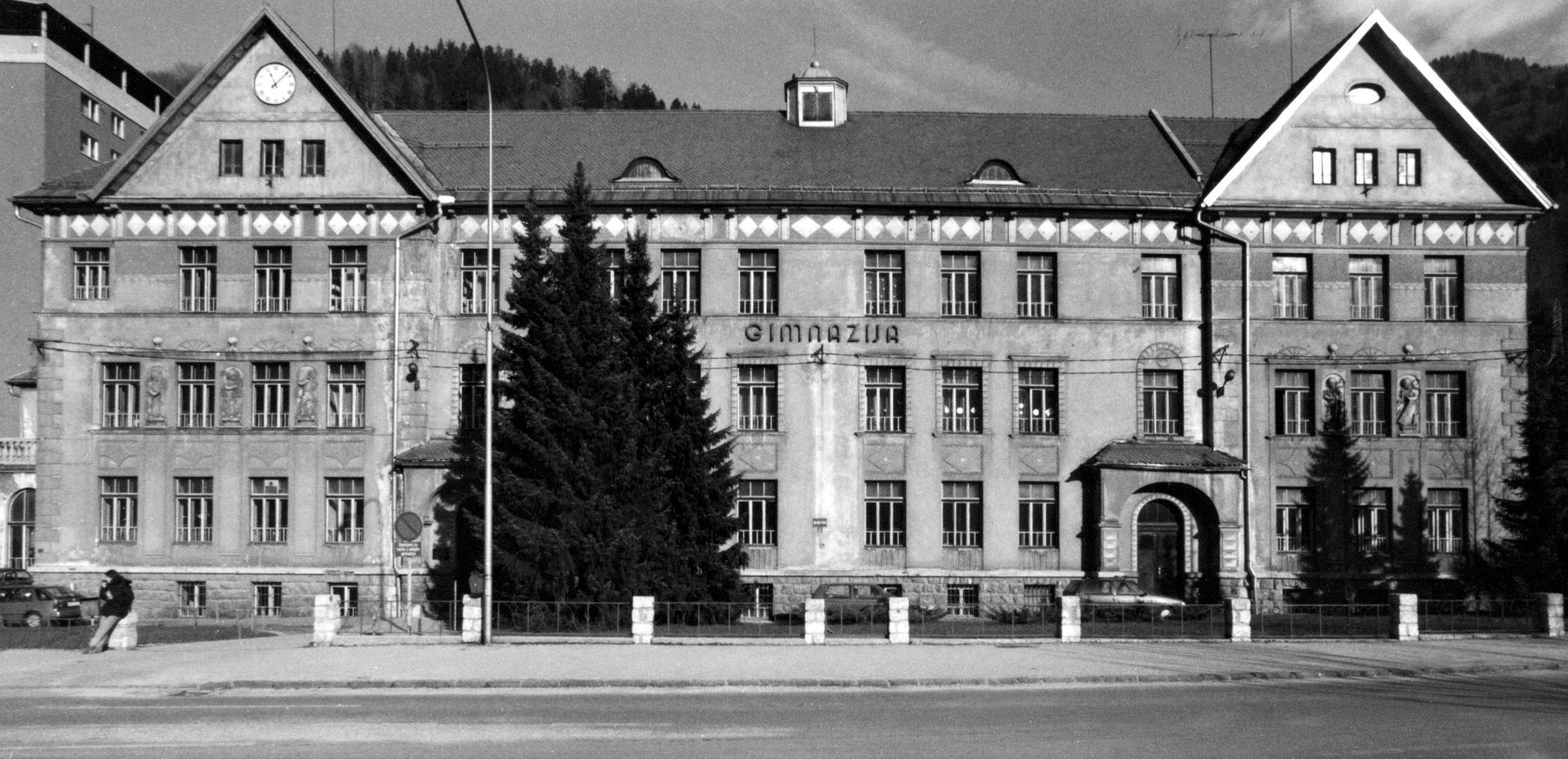
The Gimnazija Jesenice secondary school was founded in the school year 1945–46. For the first four years, lessons were held on the premises of a vocational secondary school, in a building which once housed a dry-cleaner's. In 1949, the secondary school moved to the present building and was named Gimnazija.
It initially shared its premises with the primary school until a new school building was constructed on Tomšičeva ulica Street (today's Prežihov Voranc Primary School). Until the school reform in 1958, the secondary school was divided into lower (up to 4th grade) and higher level (from 5th to 8th grade). In the decades that followed, it developed into a good preparatory school for studies at universities and became noticeably established in the cultural, sports and social life in Jesenice. This still remains today.